Every now and then, you come across a moment that makes you pause and reflect on the invisible threads that connect you to the past. Recently, while reading a book that has gained a great deal of popularity, I experienced one of those moments. Within its pages were two names that made my heart swell with pride—Anne Hutchinson and Achsa Sprague.
They are not simply historical figures to me. They are my ancestors.
To see their stories told in a widely read book filled me with a deep sense of reverence. These women were not quiet participants in history—they were revolutionaries. Women who stood firmly in their truth in times when doing so was dangerous, even life-threatening. To know that their blood runs through my veins is both a privilege and a responsibility.
The Courage of Anne Hutchinson
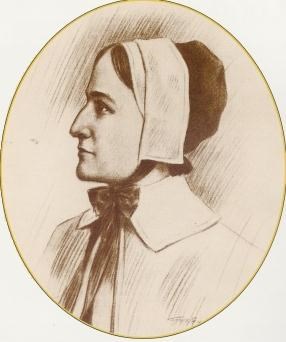
Anne Hutchinson was a bold religious thinker in the early American colonies. In the 1630s, she openly challenged the authority of Puritan ministers in Massachusetts Bay Colony, arguing that individuals could receive divine guidance directly from God without the mediation of clergy.
At a time when women were expected to remain silent in matters of theology and leadership, Anne held meetings in her home where she discussed scripture and encouraged independent thought. Her ideas threatened the rigid religious structure of the colony.
The result was predictable for the era—she was put on trial for her beliefs, condemned for her teachings, and ultimately banished from Massachusetts for her “heretical” views.
Anne Hutchinson stood for spiritual autonomy long before the idea was socially acceptable. She challenged patriarchal authority and insisted that personal revelation mattered. In many ways, she was a proto-feminist spiritual leader centuries ahead of her time.
The Voice of Achsa Sprague
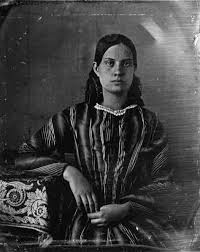
Another ancestor of mine, Achsa Sprague, carried that same revolutionary spirit into the 19th century.
Achsa was a Spiritualist speaker and activist during a time when women were rarely given public platforms. After experiencing what she believed to be a miraculous healing, she began speaking publicly about Spiritualism—the belief that communication with the spirit world was possible.
But Achsa did not stop there.
She used her voice to advocate for women’s rights, abolition, and social reform. She traveled widely, giving lectures that challenged societal norms and encouraged people to rethink the structures of power around them. Historical records also connect her work with support for the Underground Railroad, aiding those seeking freedom from slavery.
At a time when women were expected to be quiet and obedient, Achsa Sprague stood on stages and spoke truth to power.
These were not passive women in history. They were spiritual rebels.
The Blood That Shapes Us
Learning about your ancestors can be a powerful experience. It reminds you that who you are did not begin with you.
We are the continuation of countless lives—people who loved, struggled, fought, survived, and believed deeply enough to shape the future.
When I look at the lives of Anne Hutchinson and Achsa Sprague, I see echoes of my own path. Women who spoke boldly about spirituality. Women who challenged authority. Women who refused to silence their voices even when society demanded it.
It reminds me that our ancestors often live through us in ways we may not even realize.
Their courage becomes part of our inheritance.
Ancestor Veneration Across Cultures
Honoring our ancestors is not a new concept. In fact, it is one of the most universal spiritual practices across human history.
Many cultures recognize that the dead are not truly gone—they remain part of the spiritual fabric of our lives.
In African Traditional Religions and Vodou, ancestors are revered as guiding spirits who watch over their descendants. They are honored through offerings, prayers, and remembrance. The ancestors are believed to provide wisdom, protection, and spiritual grounding.
In Chinese traditions, ancestor veneration has existed for thousands of years. Families maintain ancestral altars, burn incense, and offer food during festivals such as Qingming to honor those who came before them.
In Mexican culture, Día de los Muertos celebrates the return of ancestors to the world of the living. Altars are decorated with photographs, marigolds, candles, and favorite foods of the departed.
In many Pagan traditions, ancestors are honored especially during Samhain, when the veil between worlds is believed to be thin. Offerings, candles, and stories help keep their memory alive.
Even in traditions where ancestor worship is not formally recognized, the act of remembering our lineage—telling stories, preserving family history, visiting graves—is still a form of reverence.
Because deep down, humans understand something important:
We come from somewhere.
Why Honoring Our Ancestors Matters
Ancestor veneration is not about blind worship. It is about connection.
When we honor our ancestors, we acknowledge that our lives are part of a much larger story. We recognize the sacrifices, struggles, and victories that made our existence possible.
It can also be a powerful spiritual practice. Many people believe that ancestors serve as guardians and guides, offering subtle support to those who remember them.
But even beyond spirituality, ancestor remembrance gives us identity. It roots us in history. It reminds us that we are part of a lineage that stretches across centuries.
And sometimes, as in my case, it reminds us that the fire in our spirit may have been burning long before we were born.
Walking With the Dead
To know that Anne Hutchinson and Achsa Sprague are part of my bloodline fills me with profound pride. These women challenged authority, advocated for spiritual freedom, and spoke boldly in times when doing so carried real risk.
Their legacy reminds me that the path I walk today is not entirely my own. It was paved by those who came before me.
And that is why honoring our ancestors matters.
Because when we remember them, we remember ourselves.
The dead are not truly gone.
They live in our bones, our stories, our courage, and our spirit.
And sometimes, if we listen closely, we can still hear them whispering through the generations.
 Cauldrons & Crossroads