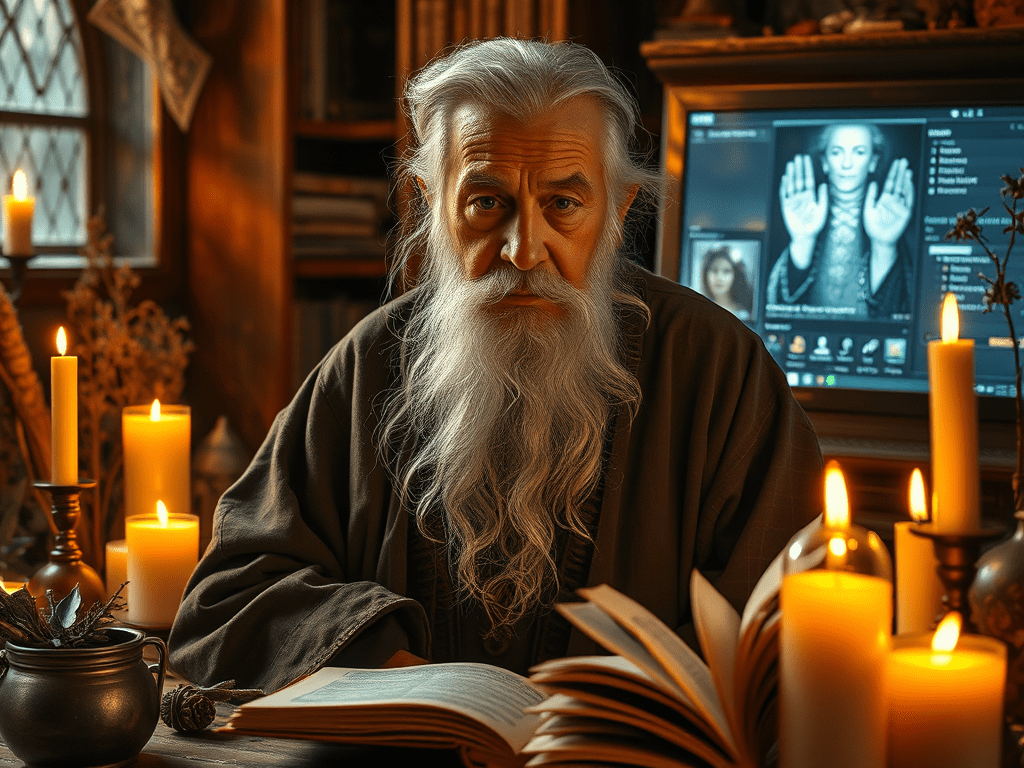
There was a time—not that long ago—when witchcraft was passed hand to hand, breath to breath, spirit to spirit.
You learned from someone.
An elder. A teacher. A guide.
Not someone with a ring light and a trending sound.
So where did they go?
Do Elders Still Exist?
Yes. They do.
But they’re quieter now.
They’re not always the loudest voice in the room. They’re not chasing algorithms or building platforms off aesthetics alone. Real elders are often found in lived experience—decades of practice, mistakes, initiations, spirit work, and deep devotion to the craft.
They’re the ones who:
- Tell you “no” when something isn’t safe
- Teach you why, not just how
- Emphasize ethics over aesthetics
- Understand that power comes with responsibility
And here’s the truth a lot of people don’t want to hear:
Elders are not always accessible. And they’re not always easy.
They challenge you. They correct you. They don’t exist to validate you—they exist to teach you.
Titles, Power, and Walking AwayI understand why people take on titles for themselves. It’s actually one of the reasons that, after all these years, I’ve chosen not to rejoin a coven. Being part of a Vodou house is a very different experience. And yes—I’m aware that some people misuse titles to manipulate others, even in harmful ways.
But I still believe there are true elders out there—people with real knowledge who genuinely want to teach. Maybe it doesn’t always happen face-to-face anymore. Maybe it happens through social media, where years of experience can still be shared in meaningful ways.
What I find discouraging is how many young witches are learning from quick video snippets, often from people who don’t truly understand the craft. Witchcraft isn’t something that can be fully learned in fragments—it deserves depth, study, and lived experience.
The Rise of Social Media Witchcraft
Social media has changed everything.
Witchcraft is now:
- 30-second spells
- Aesthetic altars curated for views
- “Do this and you’ll manifest instantly” energy
And while accessibility can be a beautiful thing, what we’re seeing now is information without foundation.
Witchcraft is being consumed like fast food.
Quick. Easy. Disposable.
But real practice?
That’s slow. That’s layered. That’s earned.
Why Learning Witchcraft Through Social Media Is Dangerous
Let’s be blunt.
Because a lot of people teaching don’t actually know what they’re doing.
And that’s where things get messy.
1. Lack of Depth
You cannot learn protection, spirit work, or ancestral practices in a 60-second clip.
You get fragments—not understanding.
2. No Lineage or Context
Many practices—especially those tied to specific cultures and traditions—require context, respect, and often permission.
Social media strips that away.
3. No Accountability
An elder is accountable. A teacher is responsible for what they pass on.
A random creator? They can disappear after giving bad advice—and you’re left dealing with the consequences.
4. Spiritual Bypassing & False Expectations
“Love and light only.”
“Everything is safe.”
“Just manifest it.”
That mindset leaves people unprotected, ungrounded, and unprepared.
But Let’s Be Real—Social Media Isn’t All Bad
It can:
- Introduce people to the path
- Help seekers find community
- Offer inspiration
But it should never replace real study, real practice, and real guidance.
Think of it as a doorway—not the temple.
So What Should You Do?
If you’re walking this path:
- Read books. Study deeply.
- Question everything—even what you’re told online
- Seek teachers with experience, not just popularity
- Learn protection before power
- Understand that this path takes time
And if you can find an elder?
Listen.
Because they are still here.
They just don’t shout over the noise.
Final Thoughts
Witchcraft is not a trend.
It is not aesthetic.
It is not a performance.
It is a path.
And paths are not meant to be walked through clips and captions alone.
They are meant to be lived.
The elders still exist.
The question is—are people still willing to listen?
 Cauldrons & Crossroads